
If you're reading this because your wrist or your forearm sends you a message by late afternoon, you're in the right place, and I know exactly what that feels like. I'm Walt. I've spent my whole working life with my hands in machines, and I never figured the thing that would finally get my attention would be a mouse. When I moved my paperwork into the garage office, parts orders and supplier emails turned into four or five hours a day with my right hand planted on a mouse, and by the third week I was shaking my hand out every hour like it was full of bees. The tool that finally stopped that was the Logitech Lift, a vertical mouse a parts supplier's rep mentioned over a call, and it's the product this whole list is about.
Here's what nobody told me until I switched. A regular mouse makes you lay your hand palm down and twist your forearm toward the desk, and it holds that twist all day. That isn't rest, that's work. A vertical mouse stands your hand up into a handshake grip so your forearm stays straight, and it turns the long day into something your body was actually built for. This is the list of the ten reasons I'm glad I made the swap, all of them from a desk I built in my own garage, not from a brochure.
If Your Right Hand Is Talking to You, Start Here
The Logitech Lift is the vertical mouse that's been on my desk for six months, and it's the one I'd reach for if I was starting over. It costs what a decent tool costs, and it earns its place the same way. Check today's price and decide if it's worth a run on your own desk.
Amazon Check Today's Price on Amazon →It Sets Your Arm Straight Instead of Twisted
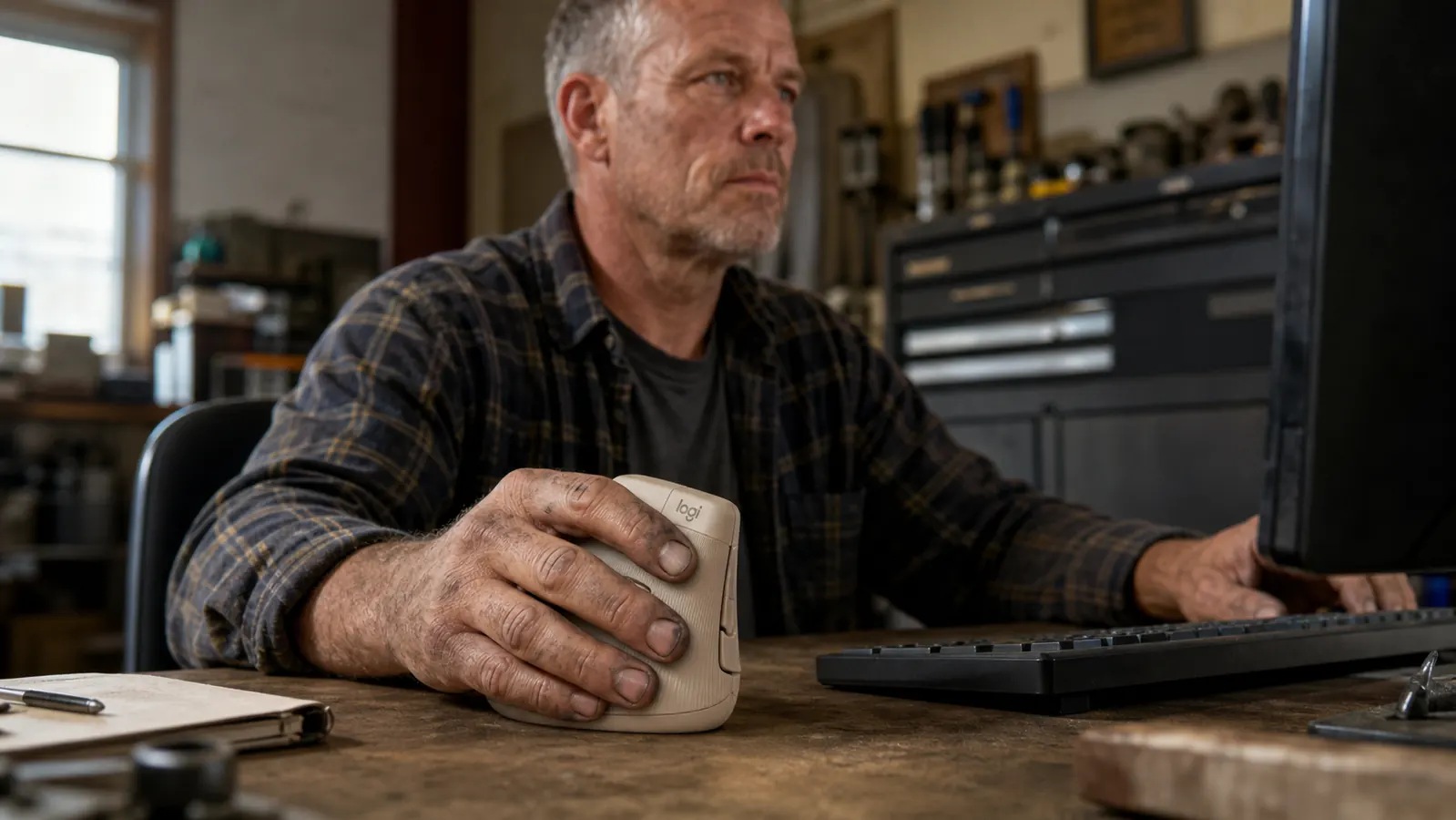
A flat mouse forces your hand palm down and rolls your forearm inward so your wrist bends toward the desk. Hold that for an hour and the muscle on the outside of your forearm is working the whole time, same as holding a wrench in a bad angle. A vertical mouse lifts your hand up into a handshake grip, thumb up, so your wrist stays close to straight and your forearm lies flat. That one change is the whole reason anyone buys one, and it's the whole reason mine stayed on my desk past the awkward first week. It's the difference between working with a tool and fighting one.
Palm Down Is a Working Position, Not a Resting One
The mistake I made for years was thinking palm down was the natural way to hold a mouse because it's the only way I'd ever held one. Flip your hand palm down next to your keyboard and it's obvious the wrist is twisted. Lay it out like you're shaking hands with someone, thumb up, and it sits neutral. The Lift just makes the neutral position the easy one, so you stop defaulting to the twist every time you reach for it before your arm even knows what it's doing.
It Gives One Overworked Muscle a Day Off
That tenderness along the outside of your forearm is the muscle that's been holding your wrist sideways for years. Take the twist away and that muscle goes quiet, full stop. I'm not promising a cure for anybody's nerve trouble, because I'm not a doctor and I won't pretend to be one. But for plain everyday strain from holding a position your body doesn't like, removing the bad position is the fix. Mine went quiet around the three-week mark, and that's the reason this whole list exists.
Same Grip on Every Task, All Day Long
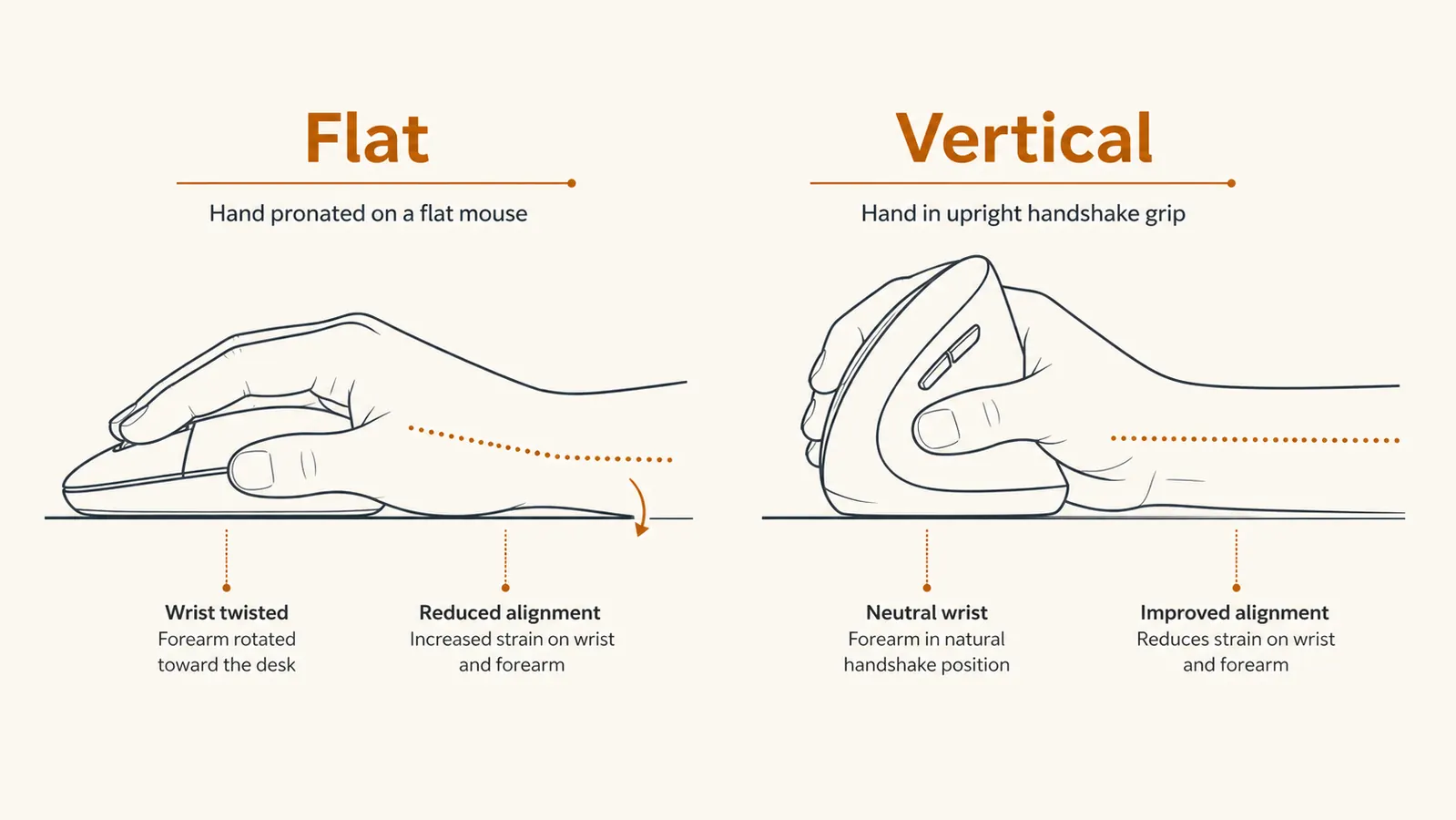
Orders, invoices, supplier follow-ups, and video calls, it's the same hand in the same grip the whole day with a vertical mouse. You build one habit instead of constantly re-steadying. With a flat mouse I'd catch myself re-gripping and shifting every few minutes, and all that fiddling is its own kind of tired. The Lift holds still in my hand and lets me do the work instead of managing the tool, which is exactly how I like every piece of gear on my bench.
Quiet Enough It Doesn't Wake the Dog
The clicks and the wheel on the Lift are low and soft, the way a good switch should be, instead of that brittle snap you get on junk mice. I work late in the garage and Dozer sleeps on the concrete not three feet from my chair, and I don't rattle him off his nap with every click. Little thing, sure, but you live on that button all day, and a loud, stiff switch grates worse than you'd think by Friday.

One Battery Lasted Months, No Fuss
I'm not the guy who remembers to charge things, so a mouse that runs a long time on a single AA suits me to the ground. I changed mine once in six months, and it wasn't even dead, I just wanted it fresh. No cable to fight in a shop full of cables, and the receiver lives in the drawer because I run it on Bluetooth. It talks to the computer the way a good tool should, which is to say you don't think about it at all.
It Actually Comes in Sizes for Your Hand
Mice love to pretend one size fits everyone, and that's a lie for hand sizes the same way it is for wrench sizes. The Lift comes in a medium and a smaller size, so it isn't pretending one fit works for every hand in the shop. A mouse that's too small makes you grip harder than you need to, and gripping hard is its own kind of strain. Sized right, your hand just rests, and rest is the goal.
It's Built Like a Tool, Not a Disposable Office Plastic
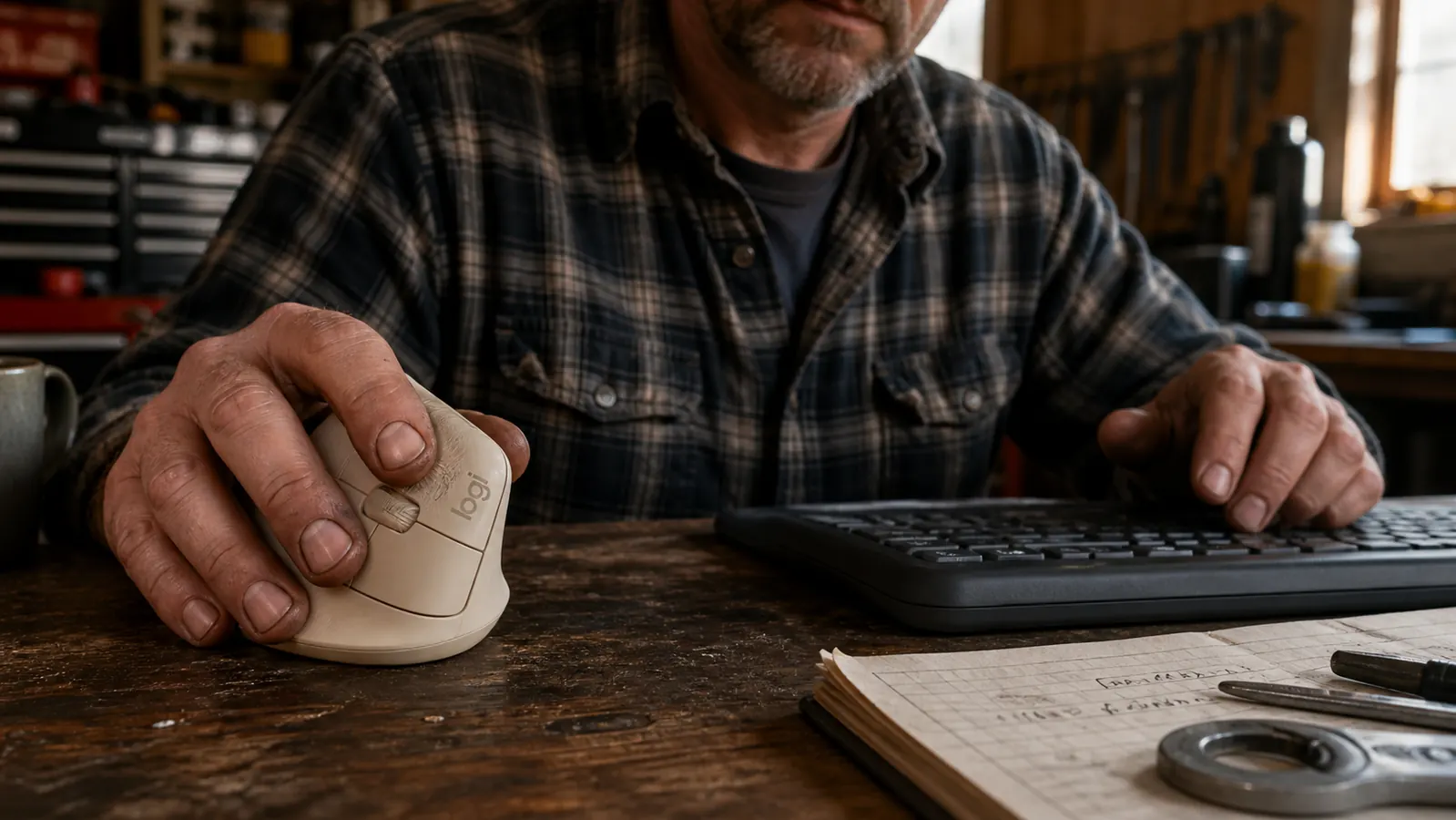
Six months of daily use and it still feels tight, not loose and rattly like the cheap mouse it replaced. The wheel still clicks clean, the buttons still feel crisp, and the rubber side grips are still where they're supposed to be, after all the parts dust and the daily grind. I judge everything by whether it holds up, and this one has held up without a complaint. That's all I ask of anything that earns a spot on my bench.
It Coaches a Lighter Grip Whether You Mean To or Not
Because your hand sits up neutral, you naturally stop strangling the mouse. That death grip you do without thinking on a flat mouse is itself a kind of strain, mostly in your fingers and palm. The Lift's upright shape has you holding it like you're resting a hand on a railing, and by the second week I noticed my hand was just sitting there loose. Easier on the whole hand, not just the wrist, which is more than I bargained for.
The Payoff Is That You Stop Thinking About It
Here's the quiet test that matters most at the end of a long day: do you notice your hand at all? The real win with the Lift came around a month in, when I realized I'd stopped shaking my hand out, stopped re-gripping, and stopped mentally scheduling the day my wrist was finally going to quit. That's the whole point of a tool that's built right, it stops asking you to carry it. If you want the slow, day-by-day version of how I got here, my six-month review of the Lift has it all, and my guide to setting up a vertical mouse without wrist pain shows the setup that makes it work.
What I'd Skip
Now the honest part, because a list of ten good reasons without a warning is doing you no favors. A vertical mouse is not for you if you only touch your mouse twenty minutes a day. The first couple of days feel strange, plain and simple, and if you're not on the thing for hours you may not stick it out long enough to get past it. And if fine-motor speed is the whole job, like fast, precise clicking, a flat mouse can honestly feel quicker because it's what your hand already knows. It's a comfort tool for long days, not a magic fix for short ones. Different job, different tool, same rule as always, reach for what fits the work.
The real win came around a month in, when I realized I'd stopped shaking my hand out and stopped thinking about my wrist entirely.
Stop Letting Your Forearm Do the Arguing
A vertical mouse isn't going to turn you into a different person or a better worker, and I wouldn't try to sell you that. It just takes the one bad position out of a long day, and that one change was worth it to me. The Logitech Lift is the one that's been on my desk if you want to give it a try.
Amazon Check Today's Price on Amazon →